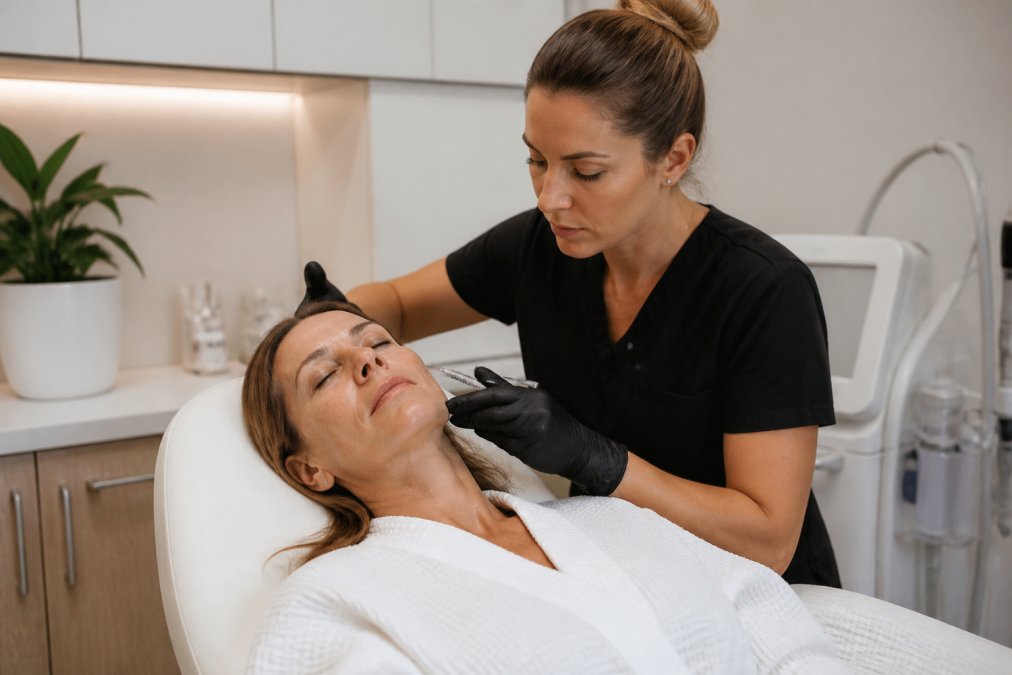
 ultimate-guide
Advanced Medical Aesthetics for Aging Skin: A Guide
Table of Contents
- Advanced Medical Aesthetics for Aging Skin: What Actually Changes as We Age
- The Core of Non-Surgical Facial Rejuvenation: Lasers, Energy, and Collagen
- Injectables and Fillers: Volume Restoration Without the Frozen Look
- Medical-Grade Anti-Aging Treatments: What Prescription Skincare Adds
- Recovery Time for Medical Aesthetic Procedures: What to Expect
- Safety, Contraindications, and Choosing Your Provider
- Building a Long-Term Plan for Aging Skin
- Frequently Asked Questions
Last Updated: September 4, 2026
Advanced Medical Aesthetics for Aging Skin: What Actually Changes as We Age
The demand for advanced medical aesthetics for aging skin has surged as more women reject the binary choice between invasive surgery and doing nothing. This guide from PuraBella Wellness explains what actually happens beneath the surface and which non-surgical approaches genuinely address those changes at a cellular level.
Skin aging is a cascade of biological events. Collagen production slows measurably in our late twenties, while the body's supply of hyaluronic acid diminishes over time (peer-reviewed research). By the mid-forties, the cumulative effects of photodamage and declining cellular turnover become visible as fine lines, texture changes, and a loss of firmness.
The wrinkle you see is only the final symptom. The underlying issue is structural: dermal thinning, breakdown of elastin fibers, and gradual bone resorption that changes facial proportions. Treating the surface alone rarely touches these deeper changes.
The Core of Non-Surgical Facial Rejuvenation: Lasers, Energy, and Collagen
Non-surgical facial rejuvenation rests on one principle: controlled injury triggers repair. Energy-based devices deliver precise thermal damage to deeper skin layers, prompting the body to produce fresh collagen and elastin.
The clinical outcome depends on three variables: the wavelength or energy type, the depth of penetration, and the thermal profile, how heat is delivered and dissipated.
How Different Energy Platforms Actually Work
Ablative lasers (e.g., CO2 and Er:YAG) vaporize the epidermis and heat the upper dermis, producing the most dramatic remodeling but requiring the longest recovery, typically 7 to 14 days of peeling and crusting. Modern fractional ablative devices divide the beam into microscopic columns, leaving islands of untreated skin that accelerate healing while still delivering deep dermal heating.
Non-ablative lasers (e.g., Nd:YAG at 1064 nm) pass through the epidermis without vaporizing it, heating the dermis to a lower threshold. They are gentler, often no downtime beyond a few hours of redness, but require multiple sessions (typically 3 to 5) to achieve what a single ablative treatment can accomplish.
Fractional non-ablative devices like the NeoGen laser, which PuraBella Wellness uses in its Corona Del Mar practice, occupy a middle ground. NeoGen uses a 1064 nm Nd:YAG wavelength in a fractionated micro-beam pattern. The key mechanism is selective photothermolysis: energy absorbed by water in the dermal tissue creates tiny columns of coagulation (microthermal zones) while sparing surrounding tissue. Each zone triggers a wound-healing cascade that includes neocollagenesis, production of new, organized type I and type III collagen, and elastin remodeling. Clinical studies show measurable improvements in laxity and texture over 3 to 6 months.
The Artemis TShape2 platform combines a thulium fiber laser for superficial resurfacing with a Nd:YAG component for deeper dermal heating. This dual-wavelength design addresses epidermal pigmentation and dermal laxity in a single session, titrating energy density and pulse duration to the patient's Fitzpatrick skin type, a critical safety consideration for darker skin tones.
Radiofrequency and Ultrasound: The Non-Laser Alternatives
Radiofrequency (RF) devices, such as Morpheus8 or Potenza, heat the dermis to 45°C to 60°C, the range at which collagen denatures and contracts, triggering remodeling. Unlike lasers, RF does not rely on chromophores, making it safer for a wider range of skin types. The microneedle component creates mechanical injury while RF energy heats tissue around each needle, amplifying the fibroblast response.
High-intensity focused ultrasound (HIFU), used in devices like Ultherapy, targets the SMAS, the same layer lifted in a surgical facelift, heating tissue to 60°C to 70°C at depths of 1.5 mm to 4.5 mm. The result is immediate tissue contraction followed by collagen remodeling over 2 to 3 months. HIFU is the only non-invasive device FDA-cleared for a brow lift, though results are more subtle than surgery (the FDA).
Matching the Device to the Biology
The choice between platforms is not about which is 'best' but which matches your skin's biology. A 55-year-old with significant photodamage and deep rhytides may benefit most from fractional ablative treatment. A 45-year-old with early laxity and no pigmentation may see better results from RF microneedling or HIFU. A patient with Fitzpatrick type IV or V skin requires lower energy densities and longer pulse durations, a nuance only an experienced practitioner can calibrate.
Laser Skin Resurfacing vs. Microneedling: Which Targets Your Concern?
The choice between laser skin resurfacing and microneedling comes down to the depth of the problem and your tolerance for recovery time.
Laser skin resurfacing uses light energy to vaporize damaged epidermal cells and heat the dermis, triggering a strong remodeling response. It excels at photodamage, pigmentation irregularities, and deeper wrinkles. Ablative lasers produce dramatic results but require meaningful recovery; non-ablative and fractional options offer a middle ground with less downtime.
Microneedling, also called collagen induction therapy, uses fine needles to create microscopic wounds. It is particularly effective for texture refinement and mild to moderate laxity, with a gentler recovery profile. Many practices combine it with radiofrequency energy to heat the deeper dermis while needles create the initial injury, amplifying fibroblast stimulation.
| Treatment | Primary Mechanism | Best For | Typical Recovery |
|---|---|---|---|
| Fractional Ablative Laser (CO2, Er:YAG) | Vaporization + deep dermal heating | Deep wrinkles, severe photodamage, scars | 7-14 days |
| Fractional Non-Ablative Laser (NeoGen, 1064 nm) | Microthermal coagulation zones | Laxity, texture, mild photodamage | 1-3 days of redness |
| RF Microneedling (Morpheus8) | Mechanical injury + RF thermal heating | Laxity, texture, pore size | 2-4 days |
| HIFU (Ultherapy) | Focused ultrasound at SMAS depth | Mild-to-moderate laxity, brow lift | None to minimal |
| Microneedling (non-RF) | Needle-induced micro-injury | Texture, superficial scarring | 1-2 days of redness |
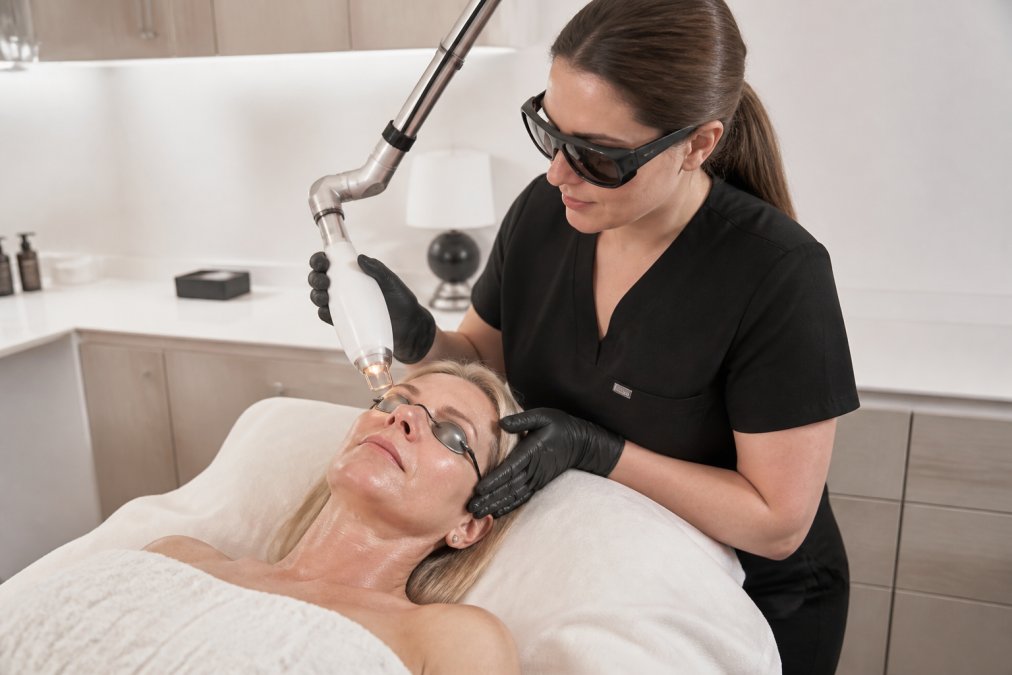
Injectables and Fillers: Volume Restoration Without the Frozen Look
The fear of looking "overdone" keeps many women from exploring injectables, and that concern is legitimate. Poorly placed fillers or excessive neuromodulator use create the frozen look that dominates celebrity gossip pages. But injectables, done thoughtfully, remain one of the most effective tools for non-surgical rejuvenation, the difference between a natural and distorted result comes down to understanding facial anatomy and the emotional context of aging.
The Anatomy of Volume Loss: More Than Just Wrinkles
Facial aging is not a uniform deflation. The face is composed of discrete fat compartments, medial cheek, lateral cheek, nasolabial, and periorbital, each aging at a different rate. The medial cheek fat descends and atrophies earlier than the lateral compartment, creating hollowing under the eyes and deepening of the nasolabial fold. The temples lose subcutaneous fat, making bony architecture more prominent, and the jawline softens as the prejowl sulcus deepens.
Dermal fillers, primarily composed of hyaluronic acid (HA), restore volume in these compartments. The FDA has approved several HA fillers, each with distinct rheological properties, the physical characteristics that determine how the gel behaves in tissue. Juvederm Voluma is a high-viscosity, high-G-prime filler for deep cheek augmentation. Restylane Lyft offers similar support with a different cross-linking profile. Juvederm Volbella and Restylane Kysse are softer fillers for the lips and perioral lines. Restylane Contour was designed for midface contouring and jawline definition.
A filler with high G-prime resists deformation and provides structural lift, while a low-G-prime filler integrates more smoothly into soft tissue for superficial lines. Using a stiff filler in the lips creates lumps; using a soft filler in the cheek does not lift. Product selection is as important as injection technique.
Neuromodulators: Precision Over Paralysis
Neuromodulators, onabotulinumtoxinA (Botox), incobotulinumtoxinA (Xeomin), abobotulinumtoxinA (Dysport), and prabotulinumtoxinA (Jeuveau), block acetylcholine release at the neuromuscular junction, temporarily relaxing muscles that cause dynamic wrinkles. The art lies in dosing and placement. Over-treating the frontalis muscle can cause brow ptosis, a drooping that ages the face rather than rejuvenating it.
A skilled practitioner uses the least amount necessary to soften contraction while preserving natural expression. The goal is not a motionless face but a rested one. Studies consistently show that conservative dosing focused on the upper face yields higher satisfaction scores than aggressive treatment of all dynamic lines.
The Psychological Dimension of Injectable Aesthetics
The decision to pursue injectables is rarely purely cosmetic. For many women, it is a response to a specific emotional trigger: catching an unflattering reflection, seeing a photo where the face looks tired, or feeling invisible in professional settings. The aging face is often perceived as less competent, less energetic, and less approachable, a bias documented in social psychology research.
A thoughtful consultation acknowledges this dimension. The provider who asks not only "What bothers you about your appearance?" but also "How do you want to feel when you look in the mirror?" opens a conversation beyond the physical. The goal of injectables is not to erase age but to align external appearance with the internal sense of self, the energy, competence, and vitality that have not diminished with the years.
The Risk-Benefit Calculus: What the Marketing Does Not Tell You
Every injectable carries risks, and the most common ones are underreported. Bruising occurs in up to 20% of patients, even with skilled technique (PubMed). Vascular occlusion, accidental injection of filler into a blood vessel, is rare (less than 0.1% of cases) but can cause skin necrosis or blindness if filler travels to the ophthalmic artery. Practitioners mitigate this through aspiration, using blunt-tip cannulas in high-risk areas, and knowing facial vascular anatomy in detail.
Patients with autoimmune disease, bleeding disorders, or current pregnancy should avoid injectables. Those taking blood thinners, including aspirin, ibuprofen, and supplements like fish oil and vitamin E, are at higher risk of bruising and should discuss cessation with their physician before treatment.
Setting Realistic Expectations: The Limits of Injectables
Injectables cannot address skin texture, pigmentation, or laxity. They restore volume and relax muscle activity but do not stimulate collagen production the way lasers or microneedling do. A comprehensive plan layers injectables with energy-based treatments and medical-grade skincare. The patient who expects fillers to tighten a jowled jawline will be disappointed; the patient who understands that fillers address volume while lasers address texture and laxity will see results that compound over time.
The most honest practitioners will tell you what injectables cannot do before what they can. That candor is the foundation of trust, and the hallmark of a provider who sees you as a person, not a procedure.
Medical-Grade Anti-Aging Treatments: What Prescription Skincare Adds
Medical-grade anti-aging treatments extend beyond the procedure room. Prescription-strength topicals play a critical role in maintaining and extending results achieved through lasers and injectables, yet they remain the most underutilized component of a comprehensive plan.
Retinoids, derived from vitamin A, remain the gold standard for topical anti-aging. They accelerate cellular turnover, stimulate collagen production, and improve skin barrier health. Unlike over-the-counter retinol, prescription-strength formulations deliver clinical efficacy validated through decades of research. The adjustment period, peeling and dryness, discourages many patients, but gradual introduction under professional guidance manages these side effects.
Ingredient-Based Maintenance: Retinoids, Peptides, and SPF
A maintenance protocol between procedures rests on three pillars: a retinoid for cellular turnover, peptides to support structural proteins, and consistent SPF application. Sun exposure drives the vast majority of preventable skin aging, making daily SPF the single most impactful habit for preserving treatment results.
Peptides are short chains of amino acids that signal the skin to produce more collagen. While they lack the potency of prescription retinoids, they complement them well, particularly for patients who cannot tolerate higher-strength formulations. Medical-grade lines often combine peptides with antioxidants like vitamin C to address both collagen support and photodamage prevention.
The mistake many patients make is treating topicals as an alternative to procedures rather than an adjunct. A medical-grade regimen extends the interval between laser sessions and improves the quality of skin entering each treatment, creating a compounding effect over time.
Recovery Time for Medical Aesthetic Procedures: What to Expect
Recovery time varies widely depending on treatment intensity and your body's healing response. Planning around downtime is essential, especially for professional women with demanding schedules.
Non-ablative laser treatments and microneedling typically cause redness and mild swelling for 24 to 72 hours, with most patients returning to work within a few days. Makeup can usually conceal residual pinkness. More aggressive ablative resurfacing requires seven to fourteen days of visible peeling and regeneration.
Injectables offer the most convenient recovery profile. Bruising and swelling typically resolve within a few days, and most patients resume normal activities immediately. The key variable is the practitioner's skill in minimizing trauma.
Safety, Contraindications, and Choosing Your Provider
Safety should drive every decision in advanced medical aesthetics, yet it receives less attention than it deserves. The FDA regulates these devices and injectables, but the skill of the practitioner determines the outcome far more than the technology itself.
Contraindications vary by treatment but commonly include active skin infections, certain autoimmune conditions, pregnancy, and recent use of isotretinoin. A thorough consultation should review your medical history, current medications, and any history of abnormal scarring or pigmentation responses. Practitioners who skip this assessment should raise immediate red flags.
Choosing a provider requires asking direct questions about training, experience, and how they handle complications. Ask to see before-and-after photos of patients with similar skin types. Inquire about the specific devices and products they use and why. A practitioner who cannot articulate the rationale behind their recommendations may not have the depth of knowledge your skin deserves.
The psychological impact of aging is real and often overlooked. Feeling that your appearance no longer reflects your energy or identity carries genuine emotional weight. A thoughtful provider acknowledges this and works with you to set realistic expectations about what advanced medical aesthetics can and cannot achieve.
Building a Long-Term Plan for Aging Skin
The most effective approach is preventative aesthetics, starting interventions before significant volume loss and laxity develop. Waiting until structural changes are advanced makes treatment more complex and recovery more demanding.
A long-term strategy layers treatments strategically. An annual or semi-annual laser session maintains collagen production at a steady rate. Injectable touch-ups every six to twelve months preserve volume in key structural zones. Daily medical-grade skincare, including a retinoid and SPF, supports the skin between procedures. This model produces natural, cumulative results that avoid the dramatic shifts of waiting until aging becomes pronounced.
At PuraBella Wellness in Corona Del Mar, the philosophy centers on personalized treatment plans that integrate advanced technology, including the NeoGen and Artemis TShape2 laser platforms, with holistic wellness support. The team recognizes that skin health reflects overall health. A consultation provides the opportunity to discuss your concerns, review your medical history, and develop a roadmap tailored to your skin's unique biology and aesthetic goals.
The best time to begin a thoughtful anti-aging protocol was a decade ago. The second-best time is now. Understanding the science behind these treatments helps you make informed decisions that support your skin's health for years to come.
Frequently Asked Questions
What are the most effective non-surgical procedures for aging skin?
The most effective options typically combine laser skin resurfacing for texture and pigmentation, microneedling for collagen induction, and injectables like dermal fillers for volume restoration. Advanced medical aesthetics often layers these treatments for a comprehensive result rather than relying on one approach. Your specific concerns, such as deep wrinkles, sun damage, or skin laxity, determine which combination a practitioner recommends during a consultation.
How do medical-grade aesthetic treatments differ from traditional facials?
Traditional facials focus on relaxation and surface-level cleansing. Medical-grade anti-aging treatments target the deeper layers of the skin to stimulate structural change. Procedures like laser therapy and microneedling create a controlled response in the dermis to boost collagen production and improve skin texture. These treatments require a medical assessment and are performed by qualified professionals, whereas facials are typically cosmetic services.
What is the typical recovery time for medical aesthetic procedures?
Recovery time varies significantly by procedure. Injectable treatments like dermal fillers usually have minimal downtime, with mild swelling resolving in a day or two. More intensive procedures, such as deep laser resurfacing, can require several days to a week of visible redness and peeling. Your practitioner will provide specific aftercare instructions to manage side effects and protect your skin during the healing process.
Are there risks associated with advanced aesthetic skin treatments?
All medical procedures carry some risk, even minimally invasive ones. Common side effects include temporary redness, swelling, and bruising. More serious complications, such as infection, scarring, or changes in pigmentation, are less common but possible. Choosing a qualified provider who conducts a thorough dermatological assessment and tailors treatment to your skin type reduces these risks significantly. Discuss your full medical history during the consultation.
How often should I schedule medical aesthetic treatments for optimal results?
Treatment frequency depends on the procedure and your goals. Some laser treatments are done in a series of three sessions spaced several weeks apart. Injectable results typically last months, requiring maintenance appointments. A long-term anti-aging protocol often combines an initial series of treatments with less frequent touch-up sessions, alongside a daily medical-grade skincare routine to maintain results between visits.
Choosing the right path for your skin requires navigating complex information about lasers, injectables, and skincare, and the stakes feel personal because they are. PuraBella Wellness offers a personalized approach that pairs professional medical expertise with advanced technology like NeoGen and Artemis TShape2 lasers, all within a welcoming, results-oriented environment. Get started with PuraBella Wellness and build a plan that supports your unique wellness journey.