 ultimate-guide
Benefits of Personalized Medical Aesthetics Plans
Table of Contents
- Why One-Size-Fits-All Aesthetic Treatments Fall Short
- The Benefits of Medical Aesthetics Consultations
- How Personalized Medical Aesthetics Plans Are Built
- Natural Looking Aesthetic Facial Treatments
- Safety, Risk Reduction, and Clinical Expertise
- Long-Term Aesthetic Maintenance Strategies
- Conclusion
- Frequently Asked Questions
Last Updated: September 15, 2026
Why One-Size-Fits-All Aesthetic Treatments Fall Short
Personalized medical aesthetics is the practice of building a treatment plan around one patient's anatomy, skin biology, health history, and goals rather than applying a standard protocol to everyone. No two faces age the same way, and a plan that ignores that reality rarely delivers results that look natural or last. This guide from PuraBella Wellness breaks down how customized aesthetic planning works, from the first consultation through long-term maintenance.
The biggest mistake in aesthetic medicine is treating the face as a template. Two patients of the same age with the same complaint, "I look tired," may need completely different plans: one has midface volume loss, the other skin laxity and pigment changes. Inject the same filler into both and one looks refreshed while the other looks puffy.
That mismatch is the core problem with cookie-cutter menus. When a clinic sells treatments instead of outcomes, the patient absorbs the risk. The American Society of Plastic Surgeons guidance on aesthetic procedures has long emphasized that patient selection and individualized planning drive satisfaction more than the specific technique chosen.
Three structural reasons one-size-fits-all fails:
- Anatomy varies enormously. Bone structure, fat distribution, and skin thickness differ enough that identical volumes produce different results.
- Aging is not uniform. Some patients lose volume first; others see laxity, texture, or pigmentation change first. Each demands a different priority.
- Goals are personal. "Look less tired" and "look 10 years younger" are not the same request, and they should not produce the same plan.
The Benefits of Medical Aesthetics Consultations
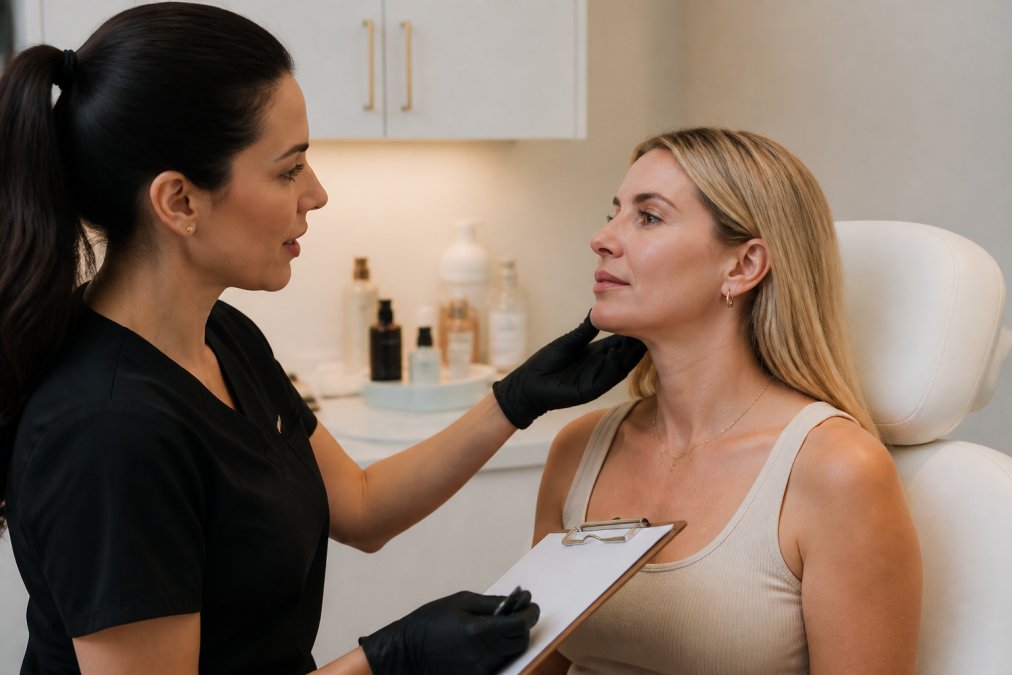
The consultation is where a good outcome is actually decided. A thorough aesthetic consultation combines facial assessment, skin analysis, medical history review, and a candid conversation about goals and expectations. Skip or rush it and everything downstream suffers.
What most guides miss is that the consultation is not a sales meeting. It's a clinical intake. A practitioner should be mapping your face, not your wallet.

The benefits of medical aesthetics consultations stack up quickly:
- Accurate baseline. A facial assessment documents where volume, tone, and texture sit today, so progress is measurable rather than guessed.
- Realistic expectations. Patients who understand what a treatment can and cannot do report higher satisfaction and fewer surprises.
- Risk screening. Medical history, medications, allergies, and prior procedures all change what is safe to recommend.
- Sequenced planning. Some concerns are better addressed in a specific order. Doing the right things in the wrong order wastes time and money.
A common mistake is booking a treatment before the consultation, then treating the consult as a formality. In practice, that's backwards. The plan should determine the treatment, never the reverse.
The Psychological Layer Most Guides Skip
A second benefit of the consultation rarely makes it into marketing copy: the working relationship itself. Behavioral health researchers describe a "therapeutic alliance", the shared agreement between patient and clinician on goals, tasks, and trust (pubmed.ncbi.nlm.nih.gov). In aesthetic medicine, that alliance does measurable work.
A patient who feels heard is more likely to disclose what actually changes a plan: a history of body dysmorphic concerns, a recent life stressor driving the appointment, a spouse's opinion they are quietly reacting to, or a prior result they hated but never reported. None of that surfaces in a five-minute intake form, and all of it changes what a responsible practitioner recommends.
A few concrete patterns practitioners commonly see:
- The event-driven request. A patient wants a dramatic change before a wedding or reunion. The alliance lets a practitioner say, "I can help you look refreshed by that date, but the result you're describing needs staging." Without trust, that becomes a lost sale instead of a better plan.
- The comparison trap. Patients often arrive with a photo of someone else's result. The consult is where a practitioner translates that wish into what is anatomically achievable on this face.
- The repeat-revision cycle. A patient who has bounced between providers for the same concern is often chasing an outcome no injectable can deliver. Naming that early prevents another round of disappointment.
What a Strong Consultation Actually Includes
A well-run consultation typically covers:
- Facial assessment in motion and at rest. Static photos miss how volume shifts when you smile, speak, or raise your brows.
- Skin analysis under consistent lighting, often with cross-polarized imaging that reveals sun damage and vascularity invisible to the naked eye.
- A full medication and supplement review, including blood thinners, isotretinoin history, and autoimmune conditions.
- A goals conversation that separates the outcome you want from the procedure you think you need.
- A written, sequenced plan with what happens first, what waits, and what you can decline.
A common mistake is booking a treatment before the consultation, then treating the consult as a formality. In practice, that's backwards. The plan should determine the treatment, never the reverse.
If a provider skips the goals conversation, rushes the medical history, or quotes a package before examining your face, slow down. The consultation is the cheapest part of the process and the one most likely to save you money later.
How Personalized Medical Aesthetics Plans Are Built
A personalized plan is built in layers: facial assessment and skin analysis first, then a review of your unique anatomy, then sequenced recommendations matched to your goals and downtime tolerance. The order matters, because each layer constrains the next.
Facial Assessment and Skin Analysis
Facial assessment and skin analysis are the diagnostic foundation of any customized approach. Practitioners evaluate symmetry, volume distribution, skin quality, elasticity, and pigment patterns, often using imaging tools that reveal damage invisible to the naked eye.
Skin analysis goes beyond surface appearance, looking at hydration, pore size, vascularity, and response to prior treatments. A patient with a history of post-inflammatory pigmentation needs a different plan than one with the same visible concern but no such history.
Digital simulation and visualization tools have changed this conversation. When patients see a projected outcome before committing, they make better decisions and voice concerns earlier, making the plan collaborative rather than one-directional.
Understanding Your Unique Anatomy
Unique anatomy is not a marketing phrase. It is the reason two patients need two plans. Bone structure determines where volume can be placed without distortion. Fat compartments age at different rates. Ligaments and skin thickness change how the face responds to lifting or filling.
A practitioner who understands your anatomy can predict which areas respond well and which risk an unnatural result, the difference between a plan that enhances your features and one that overwrites them.
Natural Looking Aesthetic Facial Treatments
Natural looking aesthetic facial treatments prioritize proportion and restraint over volume. The goal is a face that still looks like yours, only refreshed, which requires conservative dosing, correct placement, and building results over multiple sessions rather than all at once.
Patients often arrive worried about looking "frozen" or obviously treated. That fear is legitimate. The U.S. Food and Drug Administration information on dermal fillers notes that outcomes depend heavily on the practitioner's technique and the patient's individual response, which is exactly why planning should be conservative and reversible where possible.
Three principles separate natural results from obvious ones:
| Principle | What It Means | Why It Matters |
|---|---|---|
| Conservative dosing | Start with less, add later | Prevents overcorrection that is hard to undo |
| Anatomical placement | Match product to structure | Volume in the wrong plane distorts features |
| Staged treatment | Build over sessions | Lets tissue settle and lets you stop at the right point |
The one drawback of a staged approach is time: patients who want a dramatic change before an event may need to start earlier than planned. That trade-off is worth naming honestly up front.
Safety, Risk Reduction, and Clinical Expertise
Clinical safety in aesthetic medicine rests on three things: appropriate patient selection, practitioner expertise, and honest risk communication.
Long-Term Aesthetic Maintenance Strategies
The Financial Case for Planning Ahead
Maintenance and Lifestyle Integration
A few practical integrations that practitioners commonly recommend:
A practical maintenance rhythm looks like this:
Conclusion
Frequently Asked Questions
How do personalized medical aesthetics differ from standard treatments?
Standard treatments follow a fixed protocol for everyone, while personalized medical aesthetics start with a full facial assessment, skin analysis, and review of your medical history. Your provider then builds a plan around your unique anatomy and aesthetic goals. This customized approach means the products, techniques, and timing are chosen for your face and skin rather than applied generically.
Can personalized aesthetic plans help achieve more natural-looking results?
Yes. Natural looking aesthetic facial treatments depend on matching the right product and volume to your existing facial structure. A provider who maps your anatomy first can avoid the overfilled or frozen look that comes from treating every face the same way. Gradual, conservative adjustments also give you time to assess results before adding more.
Why is a consultation essential for creating an aesthetic treatment plan?
The benefits of medical aesthetics consultations go beyond paperwork. A consultation lets your provider assess your skin quality, facial proportions, and medical history, including medications and allergies that affect treatment choices. It also gives you space to discuss goals and budget openly. Skipping this step raises the risk of a plan that does not suit your face or your health profile.
What role does medical history play in aesthetic treatment planning?
Medical history shapes which treatments are appropriate and which carry extra risk. Conditions like autoimmune disorders, cold sores, or a tendency to scar can change what a provider recommends. Medications such as blood thinners also matter. A personalized plan accounts for these factors so your provider can reduce risk and choose the safest effective option for your situation.