 ultimate-guide
Natural Looking Aesthetic Facial Treatments Guide
Table of Contents
- What Natural-Looking Aesthetic Facial Treatments Actually Mean
- Preventative Botox Benefits: Starting Earlier Than You Think
- Dermal Fillers, Biostimulators, and Volume Restoration
- Skin Rejuvenation: Microneedling, Chemical Peels, and Collagen Production
- The Psychological Case for Subtle Enhancement Over Dramatic Change
- Building a Multi-Modal Plan: Long-Term Results and Budgeting for Maintenance
- How to Choose an Aesthetic Injector You Can Actually Trust
- Preparing for Your First Aesthetic Treatment Consultation
- Frequently Asked Questions
Last Updated: August 13, 2026
What Natural-Looking Aesthetic Facial Treatments Actually Mean
Natural looking aesthetic facial treatments are non-surgical procedures designed to restore, refresh, and subtly enhance the face without altering its fundamental character. The goal is looking like yourself, only better rested, more even-toned, and more defined.
This distinction matters more than most people realize. At PuraBella Wellness, the approach starts with understanding what your face naturally looked like at its best, then working to restore that baseline rather than impose a new one.

Natural-looking results depend on three things: the right treatment for the right concern, a provider who understands facial anatomy deeply, and realistic expectations about what non-surgical options can achieve. Treatments like neuromodulators, dermal fillers, microneedling, and chemical peels each address different layers of aging. Used thoughtfully and in combination, they produce gradual results that accumulate over time rather than a single dramatic change.
According to the American Society of Plastic Surgeons annual statistics report, minimally invasive procedures have grown consistently year over year, with neuromodulator injections and soft tissue fillers among the most frequently performed aesthetic treatments. The demand is for subtle enhancement, not dramatic change.
Preventative Botox Benefits: Starting Earlier Than You Think
Preventative Botox benefits are real and most pronounced when treatment begins before deep static lines form. Static lines are visible at rest, etched into the skin from years of repeated muscle movement. Once present, neuromodulators can soften them but cannot fully erase them. Starting earlier means addressing dynamic lines, those visible only during expression, before they become permanent.
Most aesthetic practitioners suggest the mid-to-late 30s as a reasonable window to begin preventative neuromodulator treatment, though this varies by genetics, sun exposure, skin type, and lifestyle. A clinical consultation will clarify where you stand.
Smaller amounts of neuromodulator are typically needed when treatment begins earlier, and intervals between appointments may be longer. Consistent, moderate treatment over years produces a more natural appearance than heavier, less frequent treatment.
Preventative Botox is not about freezing expression. It's about reducing the intensity of repetitive muscle contractions enough to slow line formation while preserving natural movement. The goal is modulation, not elimination.
Dermal Fillers, Biostimulators, and Volume Restoration
Volume loss is one of the most significant drivers of facial aging. As fat pads gradually shift and diminish, the skin loses structural support. Cheeks flatten, the under-eye area hollows, and the jawline softens. Dermal fillers restore volume directly, while biostimulators take a different approach.
Dermal fillers are injectable substances, most commonly hyaluronic acid-based, that physically replace lost volume or add structural support to the cheeks, lips, and jawline. Results are immediate and typically last several months to over a year depending on the product and placement.
Biostimulators, such as poly-L-lactic acid and calcium hydroxylapatite formulations, stimulate the body's own collagen production rather than directly filling space. Results develop gradually over several weeks to months and tend to be longer-lasting. For patients wanting subtle, progressive rejuvenation without immediate noticeable change, biostimulators are often preferred.
The most natural-looking volume restoration uses both approaches strategically. Fillers address specific structural deficits; biostimulators improve overall skin quality and tone. Neither should produce an overfilled or artificial appearance when administered conservatively.
Dermal Filler Recovery Time: What to Expect Day by Day
Dermal filler recovery time is generally mild, but knowing what to expect helps you plan appropriately.
- Days 1-2: Swelling and mild bruising at injection sites are common. The treated area may feel slightly tender.
- Days 3-5: Swelling typically peaks around day two or three, then subsides. Bruising begins to fade.
- Days 7-10: Most visible side effects have resolved. The filler settles into its final position.
- Day 14: Results are stable. This is the appropriate point to assess whether touch-up is needed.
Avoiding intense exercise, alcohol, and blood-thinning medications in the 24-48 hours before and after treatment reduces bruising likelihood. Most patients return to normal activities the same day, though high-visibility social events are best scheduled at least two weeks post-treatment.
Skin Rejuvenation: Microneedling, Chemical Peels, and Collagen Production
The most overlooked category of aesthetic facial treatments is also the most foundational: skin quality itself. Injectables address structure and volume; skin rejuvenation treatments address texture, tone, skin laxity, and surface health. Neglect this category and even excellent injectable work will look less polished.
Microneedling creates controlled micro-injuries in the skin's surface, triggering a wound-healing response that stimulates collagen and elastin synthesis. Over a series of treatments, patients see improvement in fine lines, pore size, skin texture, and mild scarring. When combined with PRF or PRP therapy, the collagen-stimulating effect is amplified.
Chemical peels resurface the skin by removing damaged outer layers, revealing fresher skin beneath. Superficial peels address uneven tone and mild texture with minimal downtime. Medium-depth peels penetrate further, targeting significant sun damage and deeper fine lines, with recovery of several days to a week.
Both work through controlled, targeted injury that prompts skin repair and rebuilding. The result is structurally healthier, more even-toned, and more radiant skin.
According to the American Academy of Dermatology guidelines on cosmetic procedures, both microneedling and chemical peels have strong safety profiles when performed by trained practitioners. The key variable is depth of treatment and patient selection.
The Psychological Case for Subtle Enhancement Over Dramatic Change
Patients who pursue subtle, natural-looking results consistently report higher satisfaction than those seeking dramatic change. The reason is that subtle results feel continuous with personal identity. They don't create a gap between how someone looks and how they feel inside.
The "overdone" aesthetic, overfilled cheeks, a frozen brow, lips that no longer match the face, produces psychological dissonance. Patients often feel they look like a different person rather than a better version of themselves. This outcome usually results from too much product, the wrong product, or a provider who didn't understand what the patient actually wanted.
Natural-looking aesthetic facial treatments produce what practitioners call the "nobody can quite tell" effect: people notice you look well, but they can't identify why. Colleagues assume you've had a good holiday. This is the gold standard outcome.
Be honest with your provider about your fear of looking overdone. A good practitioner will build that concern into the treatment plan from the start.
Building a Multi-Modal Plan: Long-Term Results and Budgeting for Maintenance
The long-term cumulative effects of multi-modal aesthetic treatments are significantly greater than any single procedure can achieve alone. A single round of filler looks good for a year. A consistent program combining neuromodulators, biostimulators, and periodic skin rejuvenation produces compounding results: skin quality improves, structural support is maintained, and the face ages more gracefully. Patients who take this approach for three to five years often need less product and fewer treatments to maintain results than they did at the start.
| Treatment Type | Typical Frequency | Primary Benefit | Maintenance Need |
|---|---|---|---|
| Neuromodulators | Every 3-4 months | Reduces dynamic lines | Ongoing |
| Dermal fillers | Every 9-18 months | Restores volume | Periodic |
| Biostimulators | 2-3 sessions initially, then annually | Stimulates collagen production | Low after initial course |
| Microneedling | Series of 3-6, then 1-2x/year | Improves skin texture and tone | Moderate |
| Chemical peels | Seasonally or as needed | Resurfaces skin, improves radiance | Flexible |
| LED therapy | Monthly or as add-on | Supports healing, reduces inflammation | Ongoing optional |
The most common financial mistake is treating procedures as one-off events rather than maintenance programs. Patients who budget annually, like dental care or gym membership, consistently achieve better long-term results.
Contact PuraBella Wellness for current pricing and to discuss which combination of treatments fits both your aesthetic goals and your budget.
How to Choose an Aesthetic Injector You Can Actually Trust
Knowing how to choose an aesthetic injector is the single most important decision in this process. The treatment matters less than the person performing it.
The aesthetic industry in the United States is regulated at the state level, meaning qualifications to administer injectables vary by state. According to the American Med Spa Association's state regulatory guidelines, it is essential to verify that any provider performing injections holds an appropriate medical license and operates under proper medical supervision. Board-certified physicians, nurse practitioners, and registered nurses with specific aesthetic training are among qualified providers, but credentials alone are insufficient.
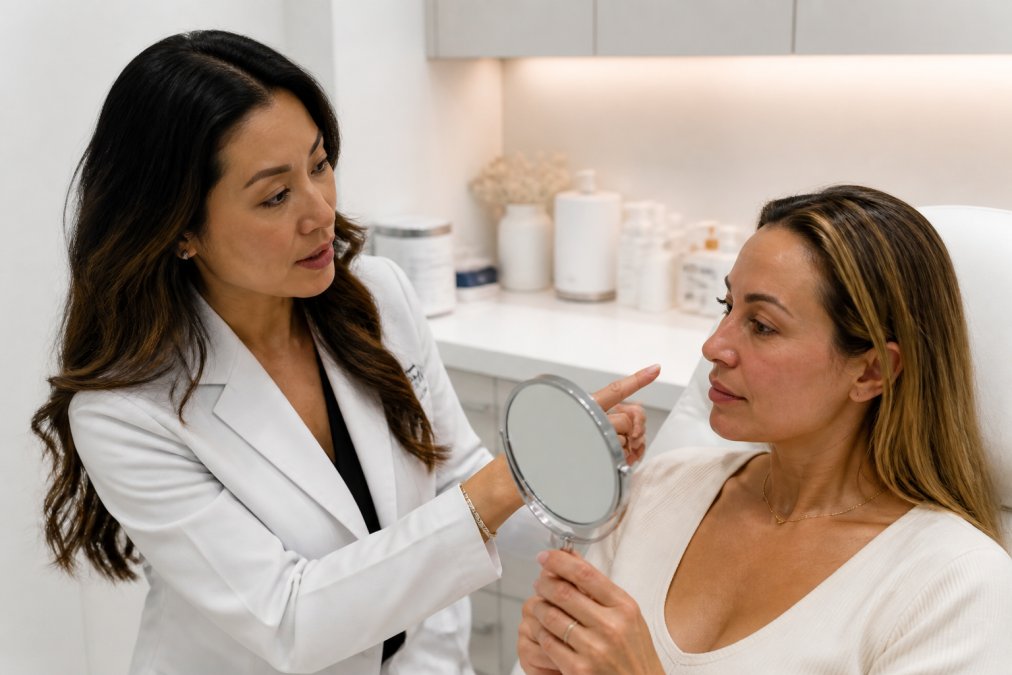
Here is what to look for beyond the license:
- Deep knowledge of facial anatomy. A qualified injector can explain exactly which muscle or tissue layer they're targeting and why.
- A conservative default approach. The best injectors routinely recommend less product than requested. Underfilling is correctable; overfilling is not.
- Before-and-after transparency. Ask to see results from patients with similar facial structures and concerns to yours.
- A thorough consultation process. Your provider should ask about medical history, medications, previous treatments, and specific goals before recommending anything.
- Willingness to say no. The most trustworthy practitioners decline requests they believe will produce poor outcomes.
The best injectors are often booked out. Plan ahead, and don't let urgency push you toward a provider who doesn't fully meet these criteria.
Preparing for Your First Aesthetic Treatment Consultation
A clinical consultation is a diagnostic conversation. How you prepare directly affects its usefulness.
Come with a clear sense of your primary concern. Is it volume loss? Fine lines? Uneven skin tone? Skin laxity? The more specific you are, the more targeted recommendations will be.
What to bring:
- A list of current medications and supplements (including blood thinners, fish oil, and vitamin E)
- Previous aesthetic treatment history
- Photos of yourself from 10-15 years ago
- Specific questions about downtime, realistic outcomes, and maintenance schedules
- An honest description of your budget range
Questions worth asking:
- What is your recommended starting point, and why?
- What results should I realistically expect, and over what timeframe?
- What are the risks specific to my anatomy or health history?
- How will we evaluate whether the result is right at follow-up?
Preventative aesthetics is most effective as a long-term relationship with a trusted provider. The consultation is where that relationship begins.
As the American Board of Cosmetic Surgery patient education resources note, informed patients who ask detailed questions during consultation consistently report higher satisfaction with results.
Many patients fear that aesthetic treatments will leave them looking unlike themselves. That fear is valid and exactly the right instinct to bring to your first appointment. PuraBella Wellness approaches every aesthetic consultation with that concern at the center, using advanced treatments including neuromodulators, biostimulators, and skin rejuvenation procedures to build results that look genuinely natural. Book your consultation with PuraBella Wellness and start with a plan designed around your face, your goals, and your timeline.
Frequently Asked Questions
How can I make sure my aesthetic facial treatments look natural and not overdone?
The most reliable safeguard is choosing an aesthetic practitioner who prioritizes facial anatomy and gradual results over dramatic change. Ask to see before-and-after photos of patients your age with similar goals. A well-trained injector will use conservative amounts of neuromodulators or dermal fillers, reassess at a follow-up, and add more only if needed. Treatments like microneedling and chemical peels support natural-looking facial rejuvenation because they work with your own collagen production rather than adding volume.
What is the difference between preventative and corrective facial aesthetics?
Preventative aesthetics focuses on slowing the formation of fine lines and wrinkles before they become deeply set. Preventative Botox, consistent sun protection, and medical-grade facials typically begin in the late 30s or early 40s. Corrective treatments address changes that have already occurred, such as volume loss, skin laxity, or uneven skin tone. Many patients benefit from a combination of both approaches, using neuromodulators to prevent new lines while biostimulators or fractional laser work to restore what has already changed.
How long do natural-looking aesthetic results typically last?
Results vary by treatment. Neuromodulators like Botox generally last three to four months before a touch-up is needed. Hyaluronic acid dermal fillers typically last six to eighteen months depending on the area treated and the product used. Collagen-stimulating treatments such as microneedling and PRF therapy produce gradual results that build over several months and can persist longer with maintenance sessions. Skin rejuvenation treatments like chemical peels improve skin texture and tone, with results maintained through a consistent skincare and sun protection routine.
Are FDA-approved options available for non-surgical facial rejuvenation?
Yes. Several non-surgical aesthetic facial treatments use FDA-approved products or devices. Neuromodulators used for fine lines and wrinkles, many hyaluronic acid dermal fillers, and certain energy-based devices carry FDA clearance or approval for specific indications. When scheduling a clinical consultation, ask your aesthetic practitioner which specific products and devices they use and whether those have FDA approval for the treatment you are considering. This is a straightforward question any qualified provider should be able to answer clearly.