 ultimate-guide
Peptide Therapy: Benefits, Costs & How to Start
Table of Contents
- What Is Peptide Therapy and How Does It Work?
- Benefits of Peptide Therapy: What Patients Actually Experience
- Conditions Commonly Addressed with Peptide Therapy
- Is Peptide Therapy Legal? Sourcing and Regulatory Transparency
- Peptide Therapy Cost: What Shapes Your Investment
- How to Find a Peptide Doctor You Can Trust
- Peptide Therapy at PuraBella Wellness
- Frequently Asked Questions
Last Updated: August 12, 2026
What Is Peptide Therapy and How Does It Work?
Peptide therapy is a medical treatment that uses short chains of amino acids to signal specific biological processes in the body, from tissue repair and hormone production to immune regulation and metabolic function. Unlike broad-spectrum pharmaceuticals, peptides interact with precise receptor sites, making them a targeted tool in modern personalized medicine.
At PuraBella Wellness, we hear the same question from nearly every new patient: "My doctor told me my labs are normal, so why do I feel this bad?" Peptide therapy often answers that question by working at the cellular level, supporting the body's own signaling pathways rather than overriding them.

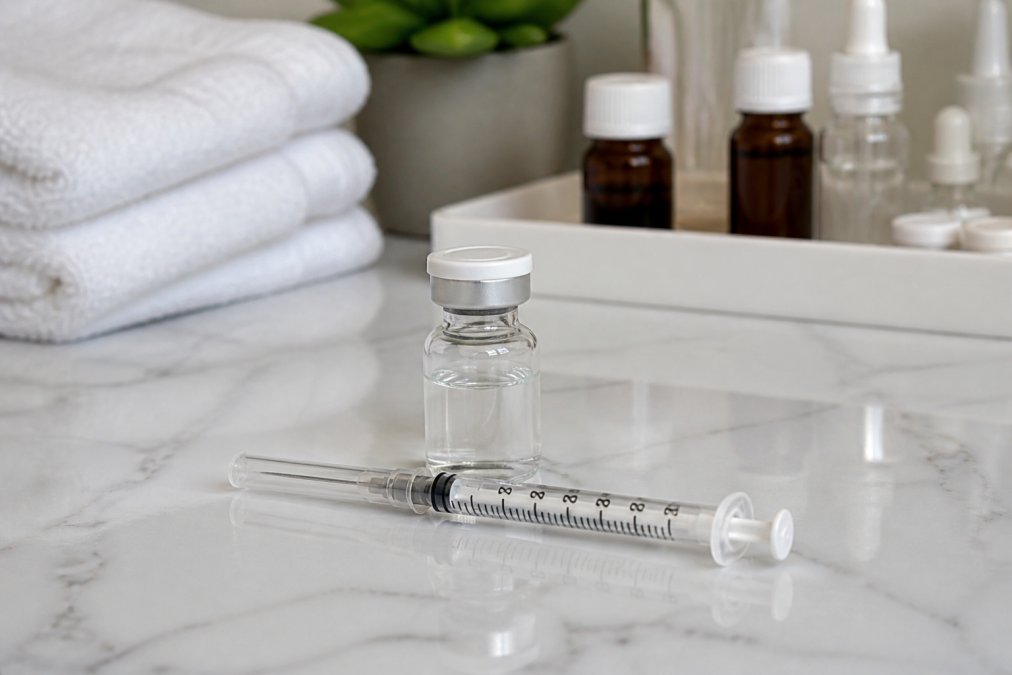
The therapy is administered via subcutaneous injections most commonly, though topical, oral, and nasal formulations exist for specific applications. A physician-supervised treatment plan begins with a clinical consultation to establish baseline health markers before any protocol is designed.
The Biological Mechanism: How Peptides Signal Your Body
Peptides are naturally occurring amino acid chains that the body already produces. As we age, production and sensitivity of many signaling molecules decline. Therapeutic peptides work by either mimicking these natural signals or amplifying the body's own response to them.
Growth hormone secretagogues, for example, stimulate the pituitary gland to increase growth hormone production on its own schedule, preserving the natural pulsatile release pattern. This distinction matters for both safety and efficacy, the result is more physiologically appropriate than direct hormone administration, with a more manageable side effect profile. Cellular repair, fat oxidation, inflammatory response modulation, and sleep optimization are all processes influenced through targeted peptide protocols.
Peptide Therapy vs. Hormone Replacement Therapy (HRT)
Hormone replacement therapy directly introduces bio-identical or synthetic hormones to raise levels below a functional threshold. Peptide therapy takes a different approach: rather than replacing a hormone, it supports the upstream signaling that governs hormone production. For patients with functional endocrine capacity but suboptimal output, peptides can restore that output without suppressing natural production.
The two approaches are not mutually exclusive. Many physician-supervised wellness protocols combine HRT with targeted peptides for more complete hormonal balance. The right choice depends entirely on a patient's clinical picture, determined through thorough consultation.
Benefits of Peptide Therapy: What Patients Actually Experience
Benefits vary by peptide, patient, and protocol. Patients who complete a full treatment cycle consistently report improvements across several domains that conventional medical care had failed to address.
Anti-Aging, Vitality, and Cognitive Function
Most patients come in focused on how they look and stay because of how they feel. Anti-aging protocols work on two levels: structural improvements in skin texture and elasticity through collagen synthesis support, and functional improvements in sleep quality, energy, and cognitive function within the first several weeks.
Cognitive function is the benefit that surprises patients most. Many describe mental clarity returning after years of low-grade fog. According to National Institutes of Health research on peptide bioactivity, peptides play documented roles in neuroprotection and neurotransmitter modulation. Vitality improvements compound over a treatment cycle: better sleep enables faster recovery from exercise, which supports more consistent training, which improves body composition.

Metabolic Health, Fat Oxidation, and Weight Management
Certain peptides improve insulin sensitivity and support fat oxidation at the cellular level. GLP-1 medications, which have become well-known in weight loss, are themselves peptide-based, they mimic a naturally occurring gut hormone that regulates appetite, gastric emptying, and insulin response. Peptide therapy for metabolic health combines GLP-1 support with protocols targeting muscle preservation, because weight loss without muscle preservation produces poor long-term outcomes.
Most weight loss programs optimize for the number on the scale rather than body composition. A physician-supervised peptide protocol targets fat oxidation while actively protecting lean mass, producing a change in body composition that sustains metabolic health improvements over time.
| Goal | Relevant Peptide Class | Primary Mechanism | Typical Protocol Length |
|---|---|---|---|
| Fat loss and body composition | GLP-1 analogs, growth hormone secretagogues | Appetite regulation, fat oxidation | 3-6 months |
| Anti-aging and skin quality | Collagen-stimulating peptides | Cellular repair, collagen synthesis | Ongoing with cycles |
| Energy and sleep optimization | Growth hormone secretagogues | Sleep quality, recovery acceleration | 3-6 months |
| Cognitive function | Neuroprotective peptides | Inflammatory response, neurotransmitter support | 8-12 weeks |
| Tissue repair and recovery | Repair peptides | Tissue regeneration, inflammatory modulation | 4-8 weeks |
Conditions Commonly Addressed with Peptide Therapy
Peptide therapy is a class of interventions with many clinical applications. The conditions most commonly addressed in a physician-supervised wellness setting include:
- Age-related decline in growth hormone production: Fatigue, reduced muscle mass, increased fat accumulation, and poor sleep that emerge in the 40s and 50s often correlate with declining growth hormone output.
- Metabolic dysfunction: Poor insulin sensitivity, difficulty losing fat despite appropriate diet and exercise, and elevated inflammatory markers.
- Chronic fatigue and sleep disruption: Patients told their labs are "normal" but still feel exhausted frequently respond well to protocols targeting sleep optimization and recovery acceleration.
- Post-injury tissue regeneration: Certain peptides accelerate tissue repair and reduce inflammatory response that slows healing.
- Cognitive decline and brain fog: Neuroprotective peptides are increasingly included in wellness optimization protocols for memory, focus, or processing speed concerns.
- Skin aging and aesthetic goals: Peptides supporting collagen synthesis complement medical aesthetic procedures, extending results.
Peptide therapy is general information and not a substitute for individual medical evaluation. A clinical consultation is the only appropriate starting point for determining whether any of these applications are right for a specific patient.
Is Peptide Therapy Legal? Sourcing and Regulatory Transparency
Peptide therapy exists within a specific regulatory framework in the United States. The FDA regulates peptides as drugs. Some peptides are FDA-approved for specific indications; others are available through licensed compounding pharmacies under specific conditions, pursuant to the Federal Food, Drug, and Cosmetic Act and FDA guidance on compounding. As documented in FDA guidance on compounding pharmacy regulations, compounded medications must be prepared by licensed pharmacies and prescribed by licensed practitioners for specific patients.
Legitimate peptide therapy involves a licensed physician issuing a patient-specific prescription, filled by a licensed compounding pharmacy operating under state board of pharmacy oversight and following current good manufacturing practice standards. This chain of custody separates therapeutic peptides from unregulated research chemicals sold online, which carry genuine safety risks and no quality assurance.
Any provider offering peptide therapy should identify which compounding pharmacy they work with and confirm that prescriptions are issued by a licensed physician following clinical evaluation. If a provider cannot answer those questions, look elsewhere.
Peptide Therapy Cost: What Shapes Your Investment
Peptide therapy cost varies based on several factors. Variables that shape what a patient pays include:
- The specific peptide or combination protocol: Some peptides are significantly more expensive to compound due to synthesis complexity and raw material costs.
- Treatment duration and dosing frequency: Standard treatment cycles run weeks to months. Longer protocols with more frequent dosing carry higher costs.
- Consultation and monitoring fees: Physician-supervised treatment includes clinical oversight, lab work interpretation, and protocol adjustments.
- Compounding pharmacy sourcing: Higher-quality compounding pharmacies with rigorous testing standards typically charge more. This is one area where cost-cutting has real consequences for therapeutic efficacy.
For current peptide therapy pricing at PuraBella Wellness, schedule a consultation where a treatment plan can be built around your specific goals and health picture.
How to Find a Peptide Doctor You Can Trust
Finding a qualified peptide doctor is challenging because the field sits at the intersection of conventional medicine and functional wellness. The American Academy of Anti-Aging Medicine's practitioner standards provides a framework for credentialed training in this space. A physician with specific training in peptide therapy, hormone optimization, and functional medicine differs meaningfully from one who has added these services without additional education.
Practical questions to ask when evaluating a provider:
- Is the prescribing physician board-certified, and in what specialty?
- Does the practice use a licensed compounding pharmacy with verifiable quality standards?
- Will the protocol be based on your lab work and health history, or is it a standard package?
- What does ongoing monitoring look like, and how are protocols adjusted if results plateau?
- What is the provider's approach if you experience side effects?
The answers reveal whether you are working with a clinician or a sales operation.
What a Physician-Supervised Treatment Plan Looks Like
A legitimate physician-supervised peptide therapy protocol follows a consistent structure. The process begins with a comprehensive clinical consultation and baseline lab work. The physician reviews health history, current symptoms, and treatment goals before recommending any protocol. A written treatment plan details the peptides prescribed, dosing schedule, administration method, and expected timeline for reassessment.
Subcutaneous injections are typically self-administered at home following a brief training session. The physician or care team remains accessible for questions, and a follow-up assessment is scheduled at a defined interval to review progress and adjust the protocol if needed.
Post-Treatment Maintenance and Long-Term Protocols
Peptide therapy produces results during the active treatment cycle. Maintaining those results requires a structured post-treatment approach. For metabolic and body composition goals, this typically involves transitioning to a lower-dose maintenance protocol, continued attention to nutrition and exercise, and periodic reassessment of lab markers.
For anti-aging and vitality goals, many patients move to cyclical protocols, alternating periods of active peptide use with rest periods that maintain receptor sensitivity. Patients who sustain results are almost universally those who maintain the clinical relationship and adjust their protocol as their body and goals evolve.
Peptide Therapy at PuraBella Wellness
PuraBella Wellness offers physician-supervised peptide therapy as part of a broader approach to personalized wellness that combines medical expertise with advanced biohacking techniques. The practice integrates peptide protocols with complementary services including GLP-1 weight loss programs, IV treatments, and medical aesthetic procedures, allowing patients to address multiple dimensions of health within a single, coordinated care plan.
Treatment plans are developed following a thorough consultation and adjusted based on patient response rather than predetermined packages. For patients who have been told their labs are normal but still feel far from their best, or who have tried other weight loss approaches without lasting results, peptide therapy within a structured, physician-supervised program offers a genuinely different clinical pathway.
To explore whether peptide therapy is appropriate for your goals, the first step is a consultation with the PuraBella Wellness team.
Persistent fatigue, stubborn metabolic resistance, and the frustration of feeling out of sync with your own body are real clinical problems deserving more than a generic recommendation to sleep more and exercise. PuraBella Wellness provides physician-supervised peptide therapy grounded in personalized medicine, with protocols built around your specific labs, goals, and health history. Book your consultation with PuraBella Wellness and take the first step toward a treatment plan actually designed for you.
Frequently Asked Questions
Does insurance cover peptide therapy?
Most health insurance plans do not cover peptide therapy because the majority of peptide treatments are prescribed off-label or for wellness optimization rather than a diagnosed condition with an FDA-approved indication. Patients typically pay out of pocket. Some flexible spending accounts (FSAs) or health savings accounts (HSAs) may apply depending on how the treatment is prescribed, so it is worth asking your provider and benefits administrator before your first appointment.
Do I need a prescription to get peptide therapy?
Yes. Legitimate peptide therapy requires a prescription from a licensed physician. A qualified provider will conduct a clinical consultation, review your health history, and order relevant labs before recommending any protocol. Any source offering prescription peptides without a valid physician-patient relationship is operating outside federal law. Physician-supervised treatment is not just a formality, it is what separates a safe, personalized protocol from an unregulated product purchased online.
What are the common side effects of peptide injections?
Side effects vary by peptide type and individual patient, but the most commonly reported include mild injection-site reactions such as redness or swelling, temporary water retention, and occasional fatigue during the first treatment cycle. Some peptides that stimulate growth hormone production may cause transient joint discomfort. Serious adverse effects are uncommon when treatment is physician-supervised and sourced from a licensed compounding pharmacy. A thorough clinical consultation before starting helps identify your personal side effect profile and appropriate dosing.
How long does it take to see results from peptide therapy?
Most patients begin noticing early changes, improved sleep quality, better energy, or reduced recovery time, within the first four to six weeks of a treatment cycle. More significant shifts in body composition, metabolic health, or skin quality typically emerge over three to six months of consistent, physician-supervised treatment. Results depend on the specific peptides prescribed, your baseline health, lifestyle factors, and adherence to the full protocol. A follow-up consultation helps assess progress and adjust the plan as needed.